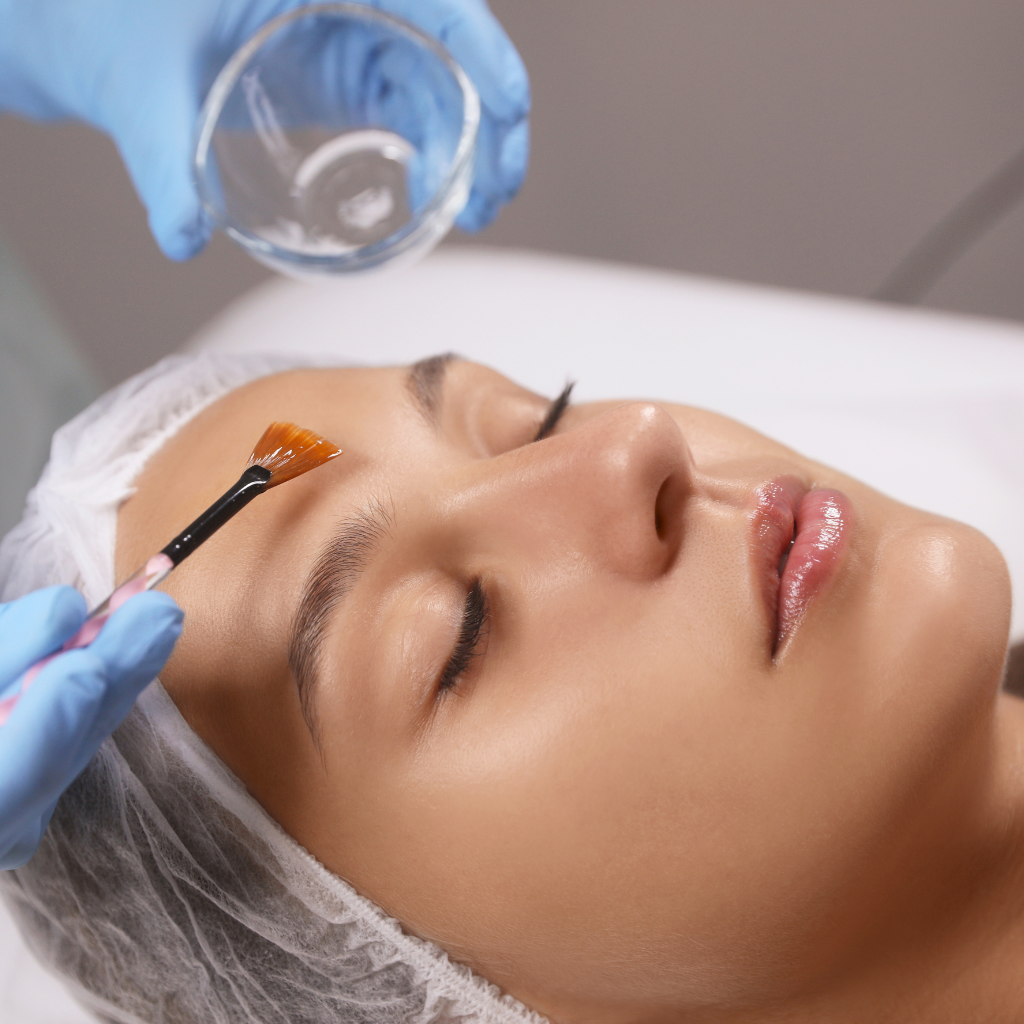
Targeted Exfoliation for Clearer, Smoother, More Even-Looking Skin
At Agamé Beauté, Chemical Peels provide a customized approach to improving the appearance of skin congestion, uneven pigmentation, rough texture, and other common complexion concerns. Professional exfoliating solutions are carefully selected according to your skin condition, sensitivity, and aesthetic goals.
By removing selected layers of surface skin cells and supporting the skin’s natural renewal process, chemical peels can help reveal a smoother, brighter, and more refined complexion.
What are Chemical Peels?
Chemical peels are professional exfoliating treatments that use carefully selected acids or other peeling agents to encourage controlled shedding of the outermost layers of the skin.
Different peel formulations work at different depths and can be selected for specific concerns. A customized peel may focus on congestion and breakouts, uneven pigmentation, dullness, rough texture, or signs of skin aging.
The strength and formulation of the peel should always be selected according to the individual’s skin type, condition, treatment goals, and tolerance.


Benefits of Chemical Peels
Refines Skin Texture
Controlled exfoliation helps remove accumulated surface cells, supporting a smoother and more refined-looking complexion.
Helps Address Congestion
Appropriately selected peels can help improve the appearance of congested pores and blemish-prone skin.
Improves the Appearance of Pigmentation
Certain peel formulations can help address superficial uneven pigmentation and discoloration.
Brightens the Complexion
Exfoliation can help reveal fresher-looking skin beneath dull surface cells.
Supports Skin Renewal
Chemical peels encourage the skin’s natural renewal process, helping improve overall skin appearance over time.
Customizable Treatment
The formulation and strength can be selected according to your skin concerns and individual needs rather than applying the same peel to every client.
What Can Chemical Peels Address?
Depending on the formulation selected, a professional chemical peel may be used to improve the appearance of:
- Congested pores
- Breakout-prone skin
- Uneven skin texture
- Dull complexion
- Superficial pigmentation
- Uneven-looking skin tone
- Fine lines
- Rough or dry surface skin
- Post-blemish discoloration
Not every peel is appropriate for every concern. Your provider will determine which formulation is most suitable during your assessment.
Customized Peel Selection
There is no single chemical peel that is ideal for every skin type.
Your provider considers factors such as:
- Skin type
- Skin sensitivity
- Primary concerns
- Current skincare routine
- Previous treatments
- Recent sun exposure
- Pigmentation history
- Desired outcome
The peel strength, formulation, application time, and treatment frequency can then be adjusted accordingly.
Who May Benefit From Chemical Peels?
Chemical Peels may be suitable for adults who are concerned about:
- Congested or dull-looking skin
- Uneven texture
- Superficial pigmentation
- Visible signs of sun exposure
- Breakout-prone skin
- Post-blemish marks
- Fine lines
- Overall skin renewal
A professional assessment is recommended before treatment, particularly for clients with sensitive or pigmentation-prone skin.
How the Treatment Works
1. Consultation & Skin Assessment
Your provider evaluates your skin and discusses your concerns, current skincare routine, medical history, and treatment goals.
This assessment helps determine whether a chemical peel is appropriate and which type of peel may be suitable.
2. Skin Preparation
The skin is thoroughly cleansed and prepared before the peeling solution is applied. Depending on the peel selected, specific preparation may be recommended before your appointment.
3. Application of the Peel
The selected chemical solution is carefully applied to the treatment area. You may experience mild tingling, warmth, or a temporary stinging sensation depending on the formulation.
The solution remains on the skin for an appropriate period based on the peel and your individual treatment plan.
4. Neutralization or Removal
Depending on the specific formulation, the peel may be neutralized or removed according to the manufacturer’s and practitioner’s instructions.
5. Post-Treatment Care
Your provider applies or recommends appropriate post-treatment skincare and explains how to care for your skin during the recovery period.
What to Expect After Treatment
The response following a chemical peel depends heavily on the formulation and strength used.
You may experience:
- Mild redness
- Tightness
- Dryness
- Sensitivity
- Flaking
- Peeling
- Temporary changes in skin appearance
Some superficial peels may involve little visible peeling, while stronger treatments can produce more noticeable shedding and recovery.
Do not pick, pull, or manually remove peeling skin. Allow it to shed naturally.
Results & Treatment Timeline
Your skin may look brighter and feel smoother as the surface begins to renew.
Some results may become noticeable shortly after treatment, while other improvements develop as the skin completes its renewal process.
A series of treatments may be recommended for concerns such as pigmentation, congestion, or uneven texture. Treatment frequency depends on the peel formulation, skin condition, and individual response.
Chemical Peel Aftercare
After treatment, your provider may recommend:
- Using gentle, non-irritating skincare products
- Applying broad-spectrum sunscreen
- Avoiding direct sun exposure
- Keeping the skin adequately moisturized
- Avoiding picking or peeling the skin manually
- Temporarily avoiding exfoliating products
- Pausing certain active ingredients as instructed
- Avoiding treatments that may irritate the skin until it has recovered
- Following your personalized aftercare instructions
Sun protection is particularly important following a chemical peel because newly treated skin can be more sensitive to environmental exposure.
Important Considerations
Chemical peels are not appropriate for everyone or every skin condition. The correct formulation and treatment strength are important for both safety and results.
During your consultation, inform your provider about:
- Current skincare products and active ingredients
- Prescription medications
- Recent sun exposure or tanning
- Active acne, irritation, or skin infections
- Recent waxing or other facial treatments
- A history of pigmentation changes
- A history of cold sores
- Pregnancy or breastfeeding
- Previous reactions to chemical peels
Your provider will determine whether treatment is appropriate and what preparation or precautions may be required.
Frequently Asked Questions
Are chemical peels painful?
Most professional peels produce some degree of warmth, tingling, or mild stinging during application. The sensation varies depending on the formulation and individual sensitivity.
Will my skin peel after treatment?
Not necessarily. Some peels produce minimal visible peeling, while others can cause several days of noticeable flaking or shedding. Your provider will explain what to expect from your selected peel.
How long does recovery take?
Recovery varies according to the type and strength of the peel. A superficial peel may require little downtime, while a stronger peel can require a longer recovery period.
Can chemical peels help with pigmentation?
Certain chemical peels can improve the appearance of superficial pigmentation and uneven skin tone. The appropriate formulation depends on your skin type and the cause of the discoloration.
Can chemical peels help with acne and congestion?
Yes, certain formulations may help improve the appearance of congested and blemish-prone skin by supporting exfoliation and pore refinement.
How many treatments will I need?
The number of treatments depends on your skin concerns and the type of peel selected. Your provider may recommend a single treatment or a series spaced appropriately apart.
Can I use my normal skincare products after a peel?
Not always. Some active ingredients and exfoliating products may need to be temporarily discontinued while the skin recovers. Your provider will give you specific instructions.
Can chemical peels be combined with other treatments?
Potentially, but treatments should be appropriately spaced to avoid excessive irritation. Your provider will determine which treatments can safely be combined with your chemical peel plan.
Professional Exfoliation. Personalized Skin Renewal.
Chemical Peels offer a customized approach to improving the appearance of congestion, pigmentation, uneven texture, dullness, and other common skin concerns through controlled exfoliation.
At Agamé Beauté, each peel is selected according to your skin condition, concerns, and aesthetic goals.
Book your consultation to discover which chemical peel is right for your skin.